What is branding ?
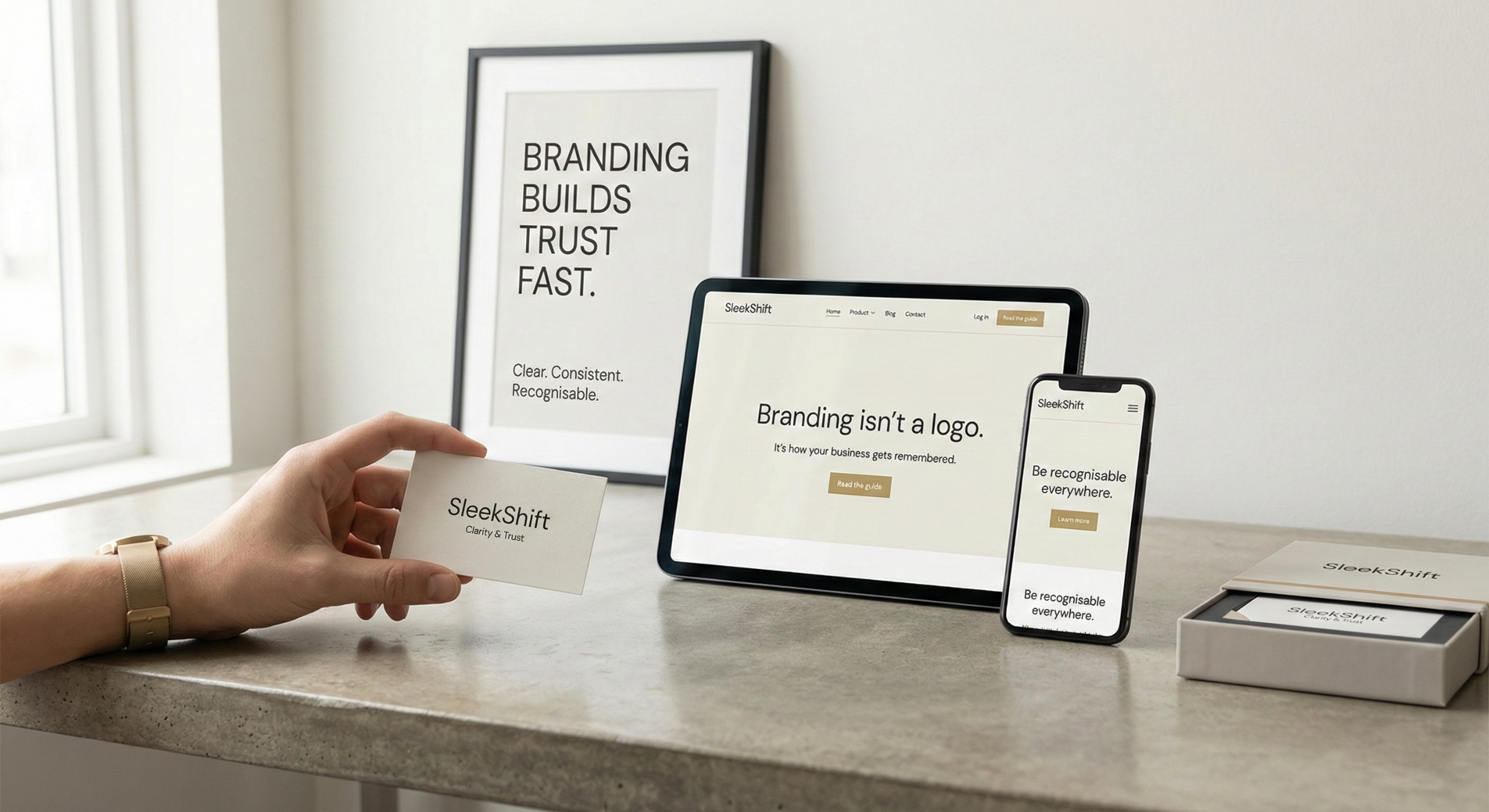
Branding Isn’t a Logo. It’s How Your Business Gets Remembered.
Branding is often reduced to logos, colours, and fonts. Those are brand assets. Useful, but not the point.
Branding is the set of cues that helps people instantly answer:
What is this?
Can I trust it?
Is it worth the price?
It’s the shortcut your customer’s brain uses when it doesn’t have time (or patience) to analyse you properly. Which is… always. If your brand feels unclear, people don’t “think it through.” They leave. Humans don’t open 17 tabs and run a committee meeting. They bounce.
What branding actually does.
Strong branding creates business advantages you can actually feel:
- Build Trust Faster : When your brand looks and sounds consistent, customers relax. It signals you’re established, even if you’re proudly fulfilling order #12 (everyone starts somewhere).
- Recognition : Branding helps people connect the dots across time and channels. They see your ad today, your product tomorrow, and think: “I’ve seen this before.” Familiarity reduces friction, and reduces suspicion, which is basically the internet’s default setting.
- Protects your price : Credible brands don’t need to lead every sentence with “20% OFF.” Occasional discounts are fine. But if discounting becomes the strategy, margins don’t just shrink, they quietly disappear.
- Makes marketing work harder : Ads buy attention. Branding earns the conversion. Without it, marketing can feel like pouring water into a bucket with a hole: technically an activity, emotionally a tragedy.
 Big brands treat branding like infrastructure, not decoration
They don’t “do branding” when they feel creative. They build it into how the business runs. Three things they do relentlessly:
- They standardise the basics : Same visual style, same tone, same overall feel across ads, site, packaging, and emails. You recognise them instantly because they don’t rebrand every Tuesday.
- They repeat one clear promise : People don’t remember five different messages. They remember one message repeated consistently. Big brands aren’t necessarily more creative here. They’re just more disciplined.
- They avoid brand surprises : The experience matches the promise. No unpleasant shocks at checkout, no vague delivery details, no “premium ad” followed by a product page that feels like it wandered in from another website.
That’s why their launches ramp faster and their ads convert better over time familiarity reduces perceived risk, and customers buy when buying feels safe.
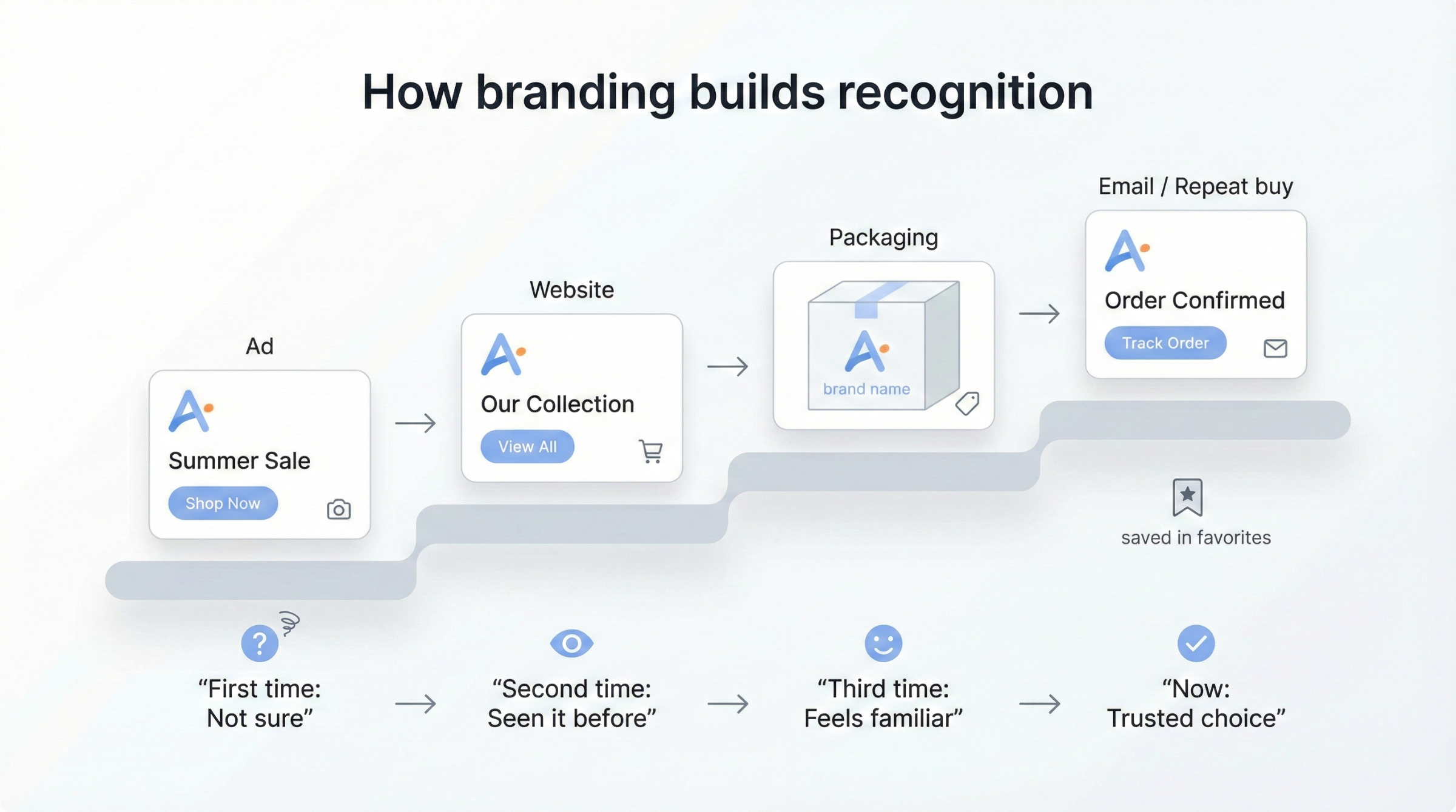
Why your brand must look and feel the same everywhere.
Customers don’t meet your business in one place. They experience a chain:
Ad → website → product page → checkout → packaging → email → repeat purchase
If each step feels like a different company, customers hesitate and in online, hesitation is just a polite way of saying “no.”
"Consistency isn’t a design preference. It’s a trust mechanism."
If your ad feels premium and calm, but your website feels loud and cluttered, the customer’s brain goes: “Something’s off.” And when something’s off, people don’t buy. They investigate and mostly... leave.
What needs to be consistent (without becoming boring)
You can change campaigns and creatives. But these should stay stable:
- Your promise: what you do for the customer (in one sentence)
- Your proof: why it’s believable (reviews, results, credibility cues, guarantees)
- Your personality: your tone (calm, bold, minimal, playful, premium)
- Your visual cues: logo usage, colour palette, typography, imagery style
- Your message order: what you say first, second, third (clarity is a feature)
A simple branding starter kit for new founders.
If you do nothing else, define these:
- One-line positioning: “We help X get Y without Z.”
- Three proof points: why you’re credible (quality, sourcing, guarantee, community, results)
- Three brand traits: e.g., “premium, calm, direct” (and write everything in that voice)
- One style rule: same fonts, same colours, same photo style everywhere
- 3-second consistency audit: does your ad and product page feel like the same company?
If you pass the 3-second audit, you’re already ahead of most stores.
The Bottom line.
Branding is not decoration. It’s how you reduce doubt, earn trust, and become recognisable in a market where everyone is shouting for attention. Build a consistent system, and your marketing stops feeling like you’re paying rent on attention. It starts behaving like an asset you actually own.
